

It’s More Than Just Your Brain — These Are the Physical Symptoms of Depression

March 20, 2019 by CHRISTINA STIEHL

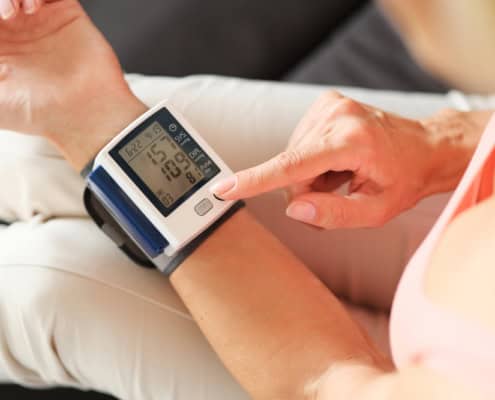
“There are other physical manifestations of depression that people may confuse with chronic pain. Psychiatrist Alex Dimitriu, MD, said that the lack of sleep and overall fatigue associated with depression can make bodily aches and pains feel worse. “There is some evidence that depression may also be a state of heightened inflammation, which may support why the body hurts more,” he told POPSUGAR. He added that’s why many people who have depression describe themselves as feeling “sick and tired” more often than not.”

Click HERE for the full article on Popsugar.

9 Common Things That Can Make You Feel Hungover (That Aren’t Alcohol)

By Eva Taylor Grant, 3/12/19

“Certain medications, taken for sleep, can also cause next day sedation or headaches,” Alex Dimitriu, M.D., double board-certified in psychiatry and sleep medicine, and founder of Menlo Park Psychiatry & Sleep Medicine, tells Bustle. If your doctor prescribes sleep medicine to you, make sure you read the side effects. And if you’re picking them up over the counter, consulting a pharmacist may still be a good idea.

Click HERE for the full article on Bustle.

5 ways to fall asleep faster, according to sleep doctors

March 11, 2019, By Wendy Rose Gould

You’ve heard this advice ad nauseum, but there’s a reason meditation has been prescribed to treat the human condition since roughly 1500 BCE. “The art of falling asleep is actually not trying so hard,” says Dr. Alex Dimitriu, who’s board-certified in both psychiatry and sleep medicine. “Knowing how to clear your thoughts and focus on breathing will always help. The trick is to practice by day — not when it’s mission-critical at 3 a.m.” Meditation can be as simple as sitting in a quiet space and taking meaningful, deliberate breaths or listening to your favorite music for five minutes.

Click HERE for the full article on NBC.com/better

A Patient’s Guide to Insomnia

By Elaine K. Howley, Contributor, 3/11/19

As awful as sleeplessness might feel, if there is strength in numbers, then you can take some small comfort in the fact that you’re far from alone. “The data shows that between 20 and 30 percent of people will be affected with insomnia during the course of their lives,” says Dr. Alex Dimitriu, a sleep medicine specialist who’s double board-certified in psychiatry and sleep medicine and founder of Menlo Park Psychiatry & Sleep Medicine in California.

Click HERE for the full article on US News & World Report.

CBD and Insomnia: What You Need to Know

By Mary Sauer, February 27, 2019

“One mechanism by which CBD works may be through a general calming of the nervous system,” explains Alex Dimitriu, MD, double board-certified in Psychiatry and Sleep Medicine and founder of Menlo Park Psychiatry & Sleep Medicine. “Cannabis strains will differ in the ratio of CBD to THC, and additional substances, called terpenes, may also play a role in determining whether the effect is activating or sedating. Generally speaking, Indica strains tend to be more sedating.”

Click HERE for the full article on Remedy Review.

Sleeping In On the Weekend Doesn’t Make Up for Lost Sleep During Week

Written by Kimberly Holland on February 27, 2019

“Sleep debt can increase depressive symptoms, worsen anxiety, lead to substance use, cause weight gain and slow metabolism, worsen inflammation, and impair memory,” Dr. Alex Dimitriu, double board-certified in psychiatry and sleep medicine, and founder of Menlo Park Psychiatry & Sleep Medicine, told Healthline.

Click HERE for the full article on HealthLine.

Is It Unhealthy to Sleep with a Baby Blanket or Stuffed Animal As an Adult?

By Gabrielle Kassel | Feb 13, 2019

“If you decide you need or want to break up with Teddy, good news: Everyone is capable of sleeping naturally. If it has become unhealthy, overcoming that habit is just a matter of being patient as you re-train yourself, says Dimitriu. He encourages his patients to practice sleeping on their own at least once in a while. “Usually, I’ll say two days with the object, one day without, to minimize psychological dependence and encourage internal healthy habits.””

Click HERE for the full article on SHAPE.

Can You Date With Schizophrenia?

By Camille Noe Pagán, February 12, 2019

“For example, if you spend the night at someone else’s house, do you have a plan for making sure you’re able to take your medication on schedule?” says Alex Dimitriu, MD, a psychiatrist and the founder of Menlo Park Psychiatry & Sleep Medicine in California.

You also need think about how the rest of your life is going. “Regularity is important if you have schizophrenia, and dating can disrupt that,” Dimitriu says. If you’re dealing with another big change, like a new job, location, or treatment plan, you may want to wait until you’re settled to try dating.

Click HERE for the full article on WebMD.

Marriage ADHD Have we lost the instinct for commitment?

February 2019

Dr. Dimitriu was published in Westchester Family Magazine.

“Marriages have always been complicated. It takes time and effort to develop trust and intimacy and the deep love that sustains a couple over many years and through the rough patches. It takes sacrifice and compromise and putting another person’s wants and needs ahead of your own. These are timeless truths. Yet it seems that the ways in which marriages develop – or fail to develop – have changed. What’s going on? Do we have “marriage attention deficit disorder”? Have our lives become so fragmented and our attention so distracted that we can no longer focus long enough to sustain a strong bond with a life partner?”

Click HERE for the full article from Westchester Family Magazine.

There’s a Shortage of a Major Anxiety Med: Here’s What to Know

Written by Brian Krans on February 7, 2019

“Dimitriu says he worries the “illusion of scarcity” could create a sense of panic and unnecessary anxiety for his patients. “Certainly it is not good to start and stop psychiatric medications abruptly, and this is a definite issue with the current shortage,” he said. Dimitriu recommends those currently on buspirone should start rationing their remaining supply “to do a ‘slow taper’ off” until supplies can be restocked, as well as speaking with your doctor and looking into alternatives to smooth the transition.”

Click HERE for the full article on Healthline.

Elderly with sleep deprivation at higher risk of Alzheimer’s

By Sholem Berkowitz, Jan 30, 2019

Dr. Alex Dimitriu – a double board-certified in psychiatry and sleep medicine and the founder of Menlo park Psychiatry & Sleep Medicine said: “Research shows that during sleep the brain can shrink substantially as it clears built-up toxins, tau, and amyloid among them.”

Click HERE for the full article on the Assisted Living Facilities Blog.

7 Shocking Ways Waking Up In The Middle Of The Night Affects Your Body The Next Day

By  Eva Taylor Grant, Jan 31, 2019

“Waking up during the night, in sleep medicine, is referred to as ‘sleep fragmentation,'” Alex Dimitriu, MD, double board-certified in psychiatry and sleep medicine, and founder of Menlo Park Psychiatry & Sleep Medicine, tells Bustle. “The trouble with waking during the night is that it impacts the quality as well as the quantity of sleep.” Since waking up in the night can interfere with your REM sleep and other important stages of the sleep cycle, you can be losing out on processes that are essential for physical and emotional health.

Click HERE for the full article on Bustle.

Anxious Millennials on the Promise of Sleep

By Marie Solis, Jan 31 2019

Alex Dimitriu, a psychiatrist and sleep medicine expert, said that in addition to stress and anxiety, the growing obsolescence of the 9-to-5 workday has had a deleterious effect on his patients’ sleep patterns. The workday hews closer to 8 to 5 (or 9 to 6) for many employees now, and a larger share of Americans are working from home—not to mention that email and team messaging apps like Slack have made it easier than ever to never stop working.

“I call it home office syndrome: You’re never relaxing and you’re always worried you should be doing something else,” Dimitriu explained. “If boundaries are blurred between work and play, why would people think there would be a clear boundary between sleep and not sleep?”

Click HERE for the full article on Broadly.com.

6 Habits That Can Be Signs Of Undiagnosed Sleep Anxiety

By Carina Wolff, 1/30/19

For those with sleep anxiety, stress over sleep extends beyond the night. “It is worthwhile noting that numerous studies of people with insomnia have shown that these people also tend to think about sleep a lot more than the average population, throughout the day,” psychiatrist and sleep medicine doctor Alex Dimitriu, MD, tells Bustle. “Symptoms of sleep anxiety may include a preoccupation with sleep in the form of thinking about it throughout the day.”

Click HERE for the full article on Bustle.

Enable Dark Mode