


Is It Bipolar Disorder or Borderline Personality Disorder?

10/22/19. Dr. Dimitriu was published in Psychology on the topic of bipolar vs borderline personality disorder.

Diagnosing psychiatric illness isn’t easy. There’s usually no lab test, physical indication, or quantitative measurement that can distinguish one illness from another and often no magic bullet that can ensure effective treatment. Clinicians are dependent on a description of symptoms and patterns over time to make a diagnosis and these often appear similar even when the underlying illness is very different.

One example of this difficulty is in the incidence of borderline personality disorder being misdiagnosed as bipolar disorder. Both are characterized by impulsive behavior, mood swings, and suicidal thinking but have different causes and different treatments. Only an experienced medical professional can make the right diagnosis and determine appropriate treatment, but patients and their families can help by paying attention to their own thoughts and feelings and describing them accurately.

Click HERE for the full article

Light flashes plus cognitive behavior therapy can increase teens’ sleep time

By Marilynn Larkin, New York (Reuters Health) October 4, 2019

Dr. Alex Dimitriu, a psychiatrist and sleep medicine specialist in Menlo Park, California, commented by email, “For phase 1, CBT was done over the phone, while in phase 2, CBT was done in person, in the lab; it would be interesting to see what is the ‘minimum’ amount of CBT, via phone or in-person, that would still be effective.” “It would also be interesting to dive into the CBT interventions further, and see which components were most powerful when combined with light therapy,” he told Reuters Health.

Click HERE for the full article.

Is “Ego Fatigue” Sabotaging Your Willpower?

9/24/19. Dr. Dimitriu was published in Psychology on the topic of Sleep and Memory: How They Work Together.

For many people, just getting through the day is a monumental struggle. Those suffering from anxiety, depression, and ADHD must fight to control their impulses simply to function and stay on task through a day of work or school when they’d rather be home in bed or playing video games. Having held it together all day, they then find those impulses even harder to control at the end of the day. Twenty years ago, a series of experiments demonstrated that impulse control is a finite resource that can be depleted – that suppressing impulses and feelings for some length of time can eventually make those impulses and feelings harder to resist. This phenomenon, known as “ego fatigue” or “ego depletion,” is recognized as a problem for those struggling with anxiety, depression, and ADHD as well as for people battling substance abuse and binge eating. The effect is similar to the depletion of physical and cognitive energy at the end of a long, busy day when all you want to do is relax and do nothing. Saying “no” to your urges all day makes it harder to control those urges in the evening when your store of control has been used up.

Click HERE for the full article

A Patient’s Guide to Pregnancy Insomnia

By Elaine K. Howley, Contributor, Sept. 11, 2019

The simple logistics of growing another human inside your belly leads to a lot of structural changes in the body, which may mean your normal sleeping positions are no longer comfortable. For example, if you prefer to sleep on your stomach, as your pregnancy progresses, you may not be able to assume that sleeping position. This can disrupt your ability to sleep and may make it difficult to find a comfortable sleeping position. Dimitriu says these structural changes in your body are one of the biggest reasons why pregnant women experience insomnia. “Being larger and trying to sleep with a big belly can be challenging.”

Click HERE for the full article.

Sleep and Memory: How They Work Together

Dr. Dimitriu was published in Psychology Today on the topic of Sleep and Memory: How They Work Together.

Medieval philosopher Thomas Aquinas once wrote that “sorrow can be alleviated by good sleep.” Now, scientists are learning he was not far from the truth. 

A study published in July 2019 in the journal Current Biology indicates a poor night’s sleep—specifically, restless rapid-eye-movement (REM) sleep—negatively impacts brain function, including the work of amygdalae. These are almond-sized clusters of nuclei located deep within the brain’s temporal lobes and responsible for the consolidation of memories for long-term learning, as well as the processing and storage of memories associated with events that elicit strong emotions like sorrow, embarrassment, fear, and anxiety.  Upon awakening, study volunteers who experienced disrupted REM sleep remained reactive to emotional events from the previous day while well-rested individuals labeled prior-day events as being of lesser emotional significance than they originally thought, according to the researchers.

Click HERE for the full article.

What to Know About Sexsomnia, a Rare Sleep Disorder Where You Have Sex in Your Sleep

By Morgan Mandriota, August 19, 2019

What triggers sexsomnia? Basically anything that disrupts a normal, healthy sleep pattern—such as drinking alcohol or consuming caffeine too close to bedtime. Maintaining an irregular sleep schedule or not getting enough sleep can led to sexsomnia as well, Alex Dimitriu, MD, who is double board-certified in psychiatry and sleep medicine and the founder of Menlo Park Psychiatry and Sleep Medicine in New Jersey, tells Health. Less commonly, sleep apnea, seizures, or a condition called REM behavior disorder can also contribute, he explains.

Click HERE for the full article.

How to Recover From a Nightmare

By Elizabeth Yuko, August 15, 2019

In fact, it’s that “realness” of dreams that causes us to continue to experience feelings from the dream—whether that’s joy, sadness, fear or anxiety—upon waking. “There is some theory that we process emotions and feelings in dreams, and in some cases if the emotions are too strong, we wake up, and never get to ‘process’ these thoughts,” Dimitriu explains. “This is believed to be the case with PTSD, and why people with PTSD continue to suffer and wake with disturbing nightmares by night, and flashbacks by day.”

Click HERE for the full article.

IS IT DANGEROUS TO WAKE A SLEEPWALKER? (AND OTHER TIPS TO HELP THE SOMNAMBULANT PEOPLE IN YOUR LIFE)

By Erin Magner, AUGUST 12, 2019

But why do people sleepwalk, anyway? Sleep medicine specialist Alex Dimitriu, MD, says it falls under the category of “parasomnia”—essentially, a glitch in a person’s sleep cycle. “These states occur when something disturbs our normal sleep depth,” says Dr. Dimitriu. “When this happens, the person awakens partially, in between sleep and wake.”

Click HERE for the full article.

Will a Weighted Blanket Improve Your Sleep? Experts weigh in on the heavy covers.

by Emma Stessman, August 2019

The problem is, weighted blankets are often made with plastic pellets or glass beads, and all that extra weight can make things hot. “The body’s ability to cool off naturally at night allows us to enter deeper, more refreshing sleep,” says Alex Dimitriu, MD, a psychiatrist and founder of Menlo Park Psychiatry & Sleep Medicine. A heavy blanket can easily interrupt that, he says. To counter those effects, you should maintain a cool room temperature and choose a blanket with a breathable material. Companies like Gravity and Luxome offer “cooling” blankets, made with moisture-wicking and thermal-controlled materials to help things stay at a sleep-worthy temp.

Click HERE for the full article.
Treating Insomnia Outside the (Black) Box

Elaine K. Howley, July 29, 2019

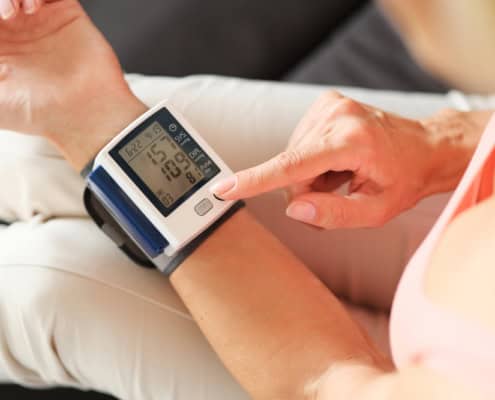
Although nonmedical interventions have long been at the top of the American Academy of Sleep Medicine (AASM) recommendations, at least one expert hopes the warnings will encourage practitioners to consider alternatives to the commonly prescribed sedative-hypnotic drugs. “Oftentimes, the hypnotic ‘Z’ drugs, such as zolpidem, are a Band-Aid or cosmetic fix for something more involved,” says Alex Dimitriu, MD, a sleep medicine specialist in Menlo Park, California.

Click HERE for the full article.
Am I Depressed or Just Exhausted?

July 23, 2019, by Risa Kerslake

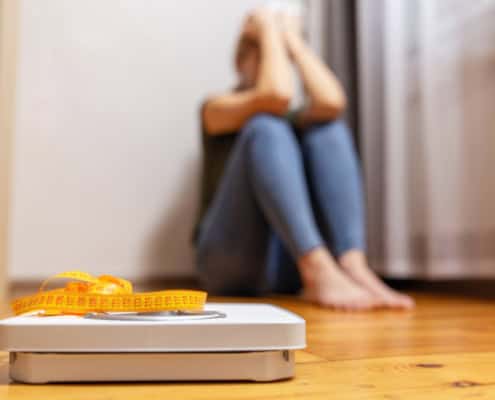
“Sleep is the tip of the iceberg for our mind’s state,” Dimitriu explains. “People find it much easier to notice sleep is off because it is objective, thus it truly opens the door to investigating if something else is wrong.”

Click HERE for the full article.

What People With Bipolar Disorder Need to Know About Exercise

Christine Coppa, July 19, 2019

Also important to stress: “If someone is in the midst of a bipolar manic or depressed episode, most non-medical interventions, including exercise, will not be enough to help, and should never be relied upon as treatment,” says Alex Dimitriu, M.D., a double board-certified psychiatrist and sleep-medicine specialist in Menlo Park, CA.

Click HERE for the full article.

REM sleep can reset your brain after an upsetting event

By Tracey Anne Duncan, 7/18/19

“REM sleep is considered a time when the brain can process emotional memories, and ‘pack them away,” says Alex Dimitriu, a psychiatrist and sleep specialist at Menlo Park Psychiatry and Sleep Medicine in the San Francisco Bay Area. “When everything is working well, we experience unpleasant — and pleasant — situations, and our brains ‘rehearse’ and process these memories through the night. Like the process of therapy, which REM sleep has been compared to, this helps consolidate and safely store these experiences.”

Click HERE for the full article.

Why You Don’t Sleep as Well on Vacation—Plus, What to Do About It

By Krissy Brady, Updated: July 16, 2019

Because sleep is such a rhythmic activity, travel can easily send our natural rhythms off the rails, says Alex Dimitriu, MD, founder of Menlo Park Psychiatry & Sleep Medicine in California. And this is true even if you’re not switching time zones in the process.

The combination of being in a new environment and the disruption to your go-to routines can make chilling out in general a challenge, but especially at night—changes in ambient temperature, bedding, noises, and even smells tend to keep us alert instead of sleeping easy.

Click HERE for the full article.

Cannabis and Mental Health: Schizophrenia

July 11, 2019, by  Andrew Ward

Dr. Alex Dimitriu is a double board-certified in Psychiatry and Sleep Medicine and founder of Menlo Park Psychiatry & Sleep Medicine. In response to this article, Dr. Dimitriu explained what the effects of psychosis are like on a person. “Psychosis is defined as having false beliefs (often called delusions) and seeing or hearing things that are not real (hallucinations). In a psychotic state, people may appear disorganized, confused, paranoid, almost as if they were tripping on something (like LSD, or magic mushrooms).”

Click HERE for the full article from High Times.

Enable Dark Mode