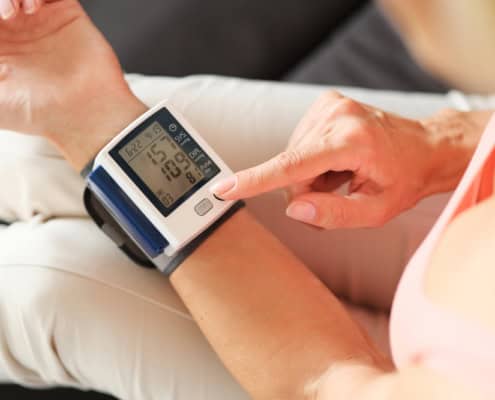

Sleepwalking Through Life

I have often joked with my wife, that I have to keep quiet about what I do for a living at any gathering. Sleep and psychiatry, it turns out, are two things people really have on their minds; and in today’s fast times, everyone seems to be stressed by working too much, and sleeping too little. On the other hand, I am equally amazed by people I meet who exercise regularly, eat healthy organic food, use meditation apps, only to tell you, on line at Starbucks, that they often only get 5 to 6 hours a night of sleep in their busy lives. I wonder about myself sometimes, as I savor a good cup of coffee in the morning, after staying up too late reading the night before. A lot of times, I couldn’t even tell you what I read, as boldly fought off sleep to the very last minute, with the power of my smartphone and the internet behind it.

The tremendous importance of sleep to our well being has been a lesson I have learned numerous times in my career as a psychiatrist. I continue to advocate that it should be a vital sign, along with blood pressure and pulse, of our general state of health. It affects everyone, young and old, and here’s some fascinating stories, that have changed my practice of medicine.

The youngest patients, I recall, were the 10 year old kids that came to Stanford, diagnosed with attention deficit disorder (ADHD), with minimal improvement on stimulants, like Ritalin or Adderall, still struggling at home and in school. These kids, it turned out, had stuffy noses, and slept on 3 pillows, fitfully through the night. Something else was going on, their tonsils were huge; and sleep tests confirmed sleep apnea (fragmented sleep because of poor breathing). The tonsils came out, and within several months, I remember to this day being hugged by moms who were so happy that their kids were off medication, sleeping soundly through the night, and not “hyperactive” anymore. Miraculous, I thought.

Then there are the middle aged patients who come worriedly to see me asking the question “Doc, I think I have Alzheimer’s, I forget movies, words, and walk into rooms and forget why!” Much to everyone’s relief, it often turns out to be a sleep problem. Our minds package up memories and practice for upcoming situations in sleep, and the value of sleep is both in quantity and quality. So many amazing studies have tested people, asked to memorize a list of words, then given a chance to sleep. More sleep, has always resulted in better recall, improved ability to learn everything from word lists, to emotional responses, to swinging a golf club. Emotions? Let’s not forget that sleep deprivation is a form of torture – and I’ve also seen so many people become emotionally “unstable” – tearful for no reason sometimes, overreactive, and irritable. One man knew he needed to catch up on his Zzz’s when after a few nights of poor sleep, he would cry over a dropped paper clip.

And the comes the energy or depression question, “Do you feel like doing things and lack the energy, or just don’t feel like doing things at all?” Fatigue can all too often look like depression, and in many instances, there is a very fine line between the two. The next time you’re on your drive home, spacing out at a stopped traffic light, thinking “woe is me, and what’s the point of all this anyway,” ask yourself if what you’re really missing is your bed, and some shut eye. Indeed a very large proportion of people I have worked with, diagnosed as attention deficit, bipolar, or treatment-resistant depression, benefit tremendously from the optimization of sleep.

I have often joked that everything you need to know about sleep, your grandmother taught you. Indeed, this is half true, in the sense that more sleep and more regular hours of sleep are a good thing. Sleep is affected most often by our habits; electronics, television, and late night web surfing to the edges of the internet. Yes we all lack some degree of discipline. But for many people, it is hard to fall asleep despite their best efforts. Anxiety is so often an overlooked factor – and we call this “battlefield sleep” or “thin sleep.” It’s the vigilant sleep one would get, sleeping in a dangerous situation, like a battlefield – with a lot of trouble falling asleep, waking up often and easily, and trouble sleeping in (no matter how late you went to sleep). Life is not a battlefield, but for anxious people, it often can be, and this becomes a nightly pattern, with fatigue and large amounts of caffeine, sometimes alcohol by the day’s end, to counter. And so the cycle repeats, sometimes for decades of people’s lives; and important experiences can often  become lost in a sleep deprived, caffeinated blur.

What to do? Sleep more and sleep better. Make sleep your health priority. Focus on habits and the use of electronics, and keep sleep on a regular schedule. Besides the quantity of sleep, look into the quality – does sleep feel light? How many times a night do you wake? Do you snore, or kick around a lot during the night? A great app to start this investigation is called SnoreLab (free on the iTunes store) – which basically records audio all night, and can show you just what happened before you woke at 4AM last night – I use this app myself, and recommend it to everyone. You spend one third of your life sleeping, and it affects every aspect of your waking life, promise. From memory to mood, to immunity, to weight loss and diabetes, and even risk of cancer, sleep has profound effects. Even more exciting, several recent studies have found that sleep can be used as part of a protocol to reverse mild dementia, and increase longevity.

Alex Dimitriu, MD
“Psychobiotics” To Naturally Improve Stress And Memory

Again more evidence supporting the tremendous role of the gut biome in maintaing physical as well as mental health. “The emerging concept of the gut microbiome as a key regulator of brain and behavior represents a paradigm shift in neuroscience. Precise targeting of the microbiome-gut-brain axis with psychobiotics — live microorganisms with a potential mental health benefit — is a novel approach for the management of stress-related conditions,” the authors of the study repot.

In this small study, 22 participants took a probiotic strain of Bifidobacterium longum daily for 4 weeks versus a placebo pill. Participants taking the probiotic lead to a decrease in anxiety, cortisol levels (a known stress hormone), improved performance on a visual memory task, as well as notable changes measured in brain activity on EEG.

The Connection Between Memory And Sleep

Through much of my training at Stanford, we often saw young patients come in complaining “doctor I think I have early Alzheimer’s.” They would forget entire movies or important events, forget why they walked into rooms, and at minimum had tremendous trouble remembering names and paying attention in conversations. A lot of times, these patients looked and essentially had, a lot of the symptoms seen in ADHD – Attention Deficit Disorder. One very important aspect that soon came into play became sleep quality.

Restful sleep gives the brain time to reorganize and store information, and prepare the brain to learn. A new body of research (see link below) has shown that untreated sleep apnea, can often advance the onset of dementia by as much as 10 years.

The good news, is that with adequate treatment, a lot of the patients seen here see markedly improved cognitive function – memory, recall, and ability for focus and sustained attention.

And, according to the study below – treatment of sleep apnea (if present) can delay the onset of any dementia or cognitive impairment substantially.

Take a look: https://www.neurology.org/content/early/2015/04/15/WNL.0000000000001566.abstract

45 Minutes To 2 Hours Of Morning Light For Weight Loss

Great article summing up two studies in the LA Times. In summary, morning sunlight, ranging in length from 45 minutes to 2 hours resulted in improved BMI (Body Mass Index measures), and reduced body fat composition. Among numerous variables investigated, the intensity and timing of morning sunlight were found to correlate most strongly with lower body mass indices. Morning sunlight is known to affect the hormones leptin and ghrelin (the latter known to increase appetite) – and the increased blue-wavelength frequencies of morning light are believed to underpin its efficacy.

Melatonin Agonist Substantially Lowers Delirium Risk

Delirium is a very common condition, often seen in the elderly population, with an incidence as high as 50% in some hospitalized patients. In addition to being very difficult for both patients, family, and care providers, it is also associated with an increased mortality risk, which makes prompt treatment imperative. The importance of the psychiatry-sleep connection is underscored by this recent study of ramelteon – essentially a more potent version of melatonin (which regulates our sleep wake cycles). In this recent study the researchers were able to lower the incidence of delirium by a staggering 32% vs 3% for placebo. This is a substantial and very meaningful finding, with the ability to markedly improve outcome in many patients.

Read about more about it here:  JAMA Ramelteon and Delirium

Trans-Cranial Direct Current Stimulation (Tdcs) – The Future Of Cognitive Enhancement?

tDCS – Transcranial direct current stimulation; involves the application of a very mild current for 20 minutes to the frontal lobes of the brain, through electrodes placed on the skin. Much to my surprise, this extremely simple and non-invasive technique is proving to have lasting effects on learning and cognition – in some instances, lasting as long as 5 hours after the treatment. The results are quite impressive and the data thus far seems consistent. The author of a recent study at Vanderbilt University states, “…when we up-regulate that process, we can make you more cautious, less error-prone, more adaptable to new or changing situations — which is pretty extraordinary.”

See the study here:

R. M. G. Reinhart, G. F. Woodman. Causal Control of Medial-Frontal Cortex Governs Electrophysiological and Behavioral Indices of Performance Monitoring and Learning. Journal of Neuroscience, 2014; 34 (12): 4214 DOI:10.1523/JNEUROSCI.5421-13.2014

Sleep Cleans Up The Brain

Jan 11, 2014 — Dr. Alex Dimitriu, Founder of the Menlo Park Psychiatry and Sleep Medicine clinic, was interviewed by the New York Times for the article, “Sleep Cleans Up The Brain.”

Read more about it here:  New York Times

Neurogenesis Stimulating Compounds – Major Depression Disorder

A novel combination of two existing (and well tolerated) medications – buspirone (a potent 5HT1A agonist, often used as an ant-anxiety medication / or for depression augmentation) and melatonin has recently shown the unique promise of potentially enhancing depression outcomes, as well as stimulating neurogenesis. Of particular interest, is that patient did much better on this particular combination of medications than on either of the two compounds alone – suggesting a unique synergistic effect, which is currently without explanation. Response rates  in depression scores (CGI score <2) were much higher for the combination – 58%, versus buspirone alone – 38%, after six weeks of treatment. Very promising, and likely to soon be patented into a new drug. Read more about it: An exploratory study of combination buspirone and melatonin SR in Major Depressive Disorder (MDD): A possible role for neurogenesis in drug discovery

Exercise Improves Memory And Increases Levels Of Bdnf (Brain Growth Hormone)

A study published in Proceedings of the National Academy of Sciences in 2011 showed that we can actively modify the gene for the production of brain-derived neurotrophic factor (BDNF) with simple exercise. The investigators looked at 120 elderly nondemented individuals over a 1-year period who either stretched or did aerobics. They measured 3 variables: serum BDNF levels, memory function, and morphometric analysis of hippocampal size on MRI before and after the intervention period. After 1 year, the group that did the aerobic exercise had an increase in hippocampus size by about 2%, improvement of memory function, and higher levels of serum BDNF. Why makes BDNF levels so important? This protein growth factor is essential to keeping neurons healthy, and to the growth of new ones – most active in areas of the brain vital to executive function, learning and long term memory.

Per the study “In sum, we found that the hippocampus remains plastic in late adulthood and that 1 y of aerobic exercise was sufficient for enhancing volume. Increased hippocampal volume translates to improved memory function and higher serum BDNF. We also demonstrate that higher fitness levels are protective against loss of hippocampal volume. These results clearly indicate that aerobic exercise is neuroprotective and that starting an exercise regimen later in life is not futile for either enhancing cognition or augmenting brain volume.”

Here’s the study: https://www.pnas.org/content/early/2011/01/25/1015950108.abstract

Insomnia: Definition, Prevalence, Etiology And Consequences

In this excellent article, Thomas Roth PhD; a leading sleep researcher discusses the far reaching effects of insomnia. This is a great article to provide background on this very common, yet very complex condition – with a prevalence of 30% of the population. Numerous and alarming consequences are discussed – ranging from increased risk of automobile accidents, depression, increased pain, and hypertension. Chronic insomnia was also marked by substantial social and career impairment. This work underscores the tremendous need for better treatments – for a condition that affects up to 1 in 3 of us.

Read the report here:  https://www.ncbi.nlm.nih.gov/pmc/articles/PMC1978319/

Enable Dark Mode